Reviewing The Great Sphinx of Giza Redwork for Craft Markets
As a professional embroidery designer, my first task before any craft fair is to evaluate new designs through the lens of real-world selling. Standing at my worktable, surrounded by blank tote bags, tea towels, and piles of fabric, I consider every detail of The Great Sphinx of Giza Redwork. This isn't just an art file; it's a potential product that needs to captivate customers from across a busy booth and be practical enough to produce in batches. Here’s my hands-on review.
The Immediate Mood and Craft Fair Appeal
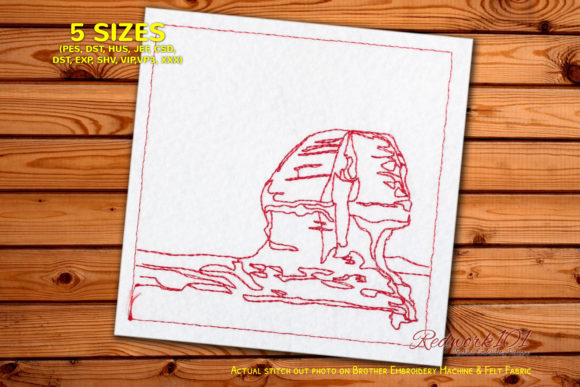
The first impression of The Great Sphinx of Giza Redwork is bold, historical, and elegantly decorative. The redwork style, traditionally using a single red thread, offers a classic and premium feel that stands apart from more colorful, cartoonish designs. In a market saturated with cute farmhouse motifs, this design brings a sophisticated, worldly vibe. It immediately suggests a customer who appreciates travel, history, or cultural artifacts. On a crowded craft fair table, its singular, striking outline will draw eyes quickly.
Where This Design Stands Out on Products
Your choice of product is crucial. Not every embroidery file works on every surface.
Tote Bags and Market Bags
This is a strong contender. The Sphinx’s horizontal, reclining shape fits beautifully on the broad side panel of a bag. The redwork design is bold enough to be a focal point without being overly busy. It elevates a simple canvas tote into a statement accessory. I’d recommend a medium to large size here; a tiny Sphinx might lose its impact on a large bag surface.
Aprons and Kitchen Towels
The Great Sphinx of Giza Redwork could perform exceptionally well on a chef’s apron, positioned centrally. On tea towels, however, caution is needed. The often textured, looped fabric of a towel can obscure finer details. You’d need a very good stabilizer and possibly a slightly larger hoop size to ensure the lion’s body and human head details remain crisp. It would make a unique, non-kitchen-themed towel that could sell as a decorative piece.
Embroidered Patches and Caps
For a patch, the design must be scrutinized for small details. The mythical creature’s features need clarity when condensed. Test it small first. On caps, the curved surface is tricky; the box stitch mentioned might add helpful stability, but dense stitch areas on curved brims can pucker. This design might be better suited for a flat, structured cap panel.
Pillow Covers and Fabric Pouches
These are excellent applications. The design feels giftable and premium on a linen pillow cover. On a small pouch, it becomes a unique, artful accent. These products allow you to showcase the handmade quality and the elegant simplicity of the redwork technique.
Production Notes for the Working Designer
Turning a digital embroidery file into a sellable craft fair product involves practical checks.
First, always test on scrap fabric that matches your final product material. Check the thread contrast—red on natural linen is classic, but on dark fabric, you might need a brighter red or even a metallic thread to pop. Review the spacing and stitch density; a reclining figure with a lion’s body could have large, dense fill areas that require proper stabilizer to prevent fabric distortion.
Since the exact hoop size isn’t specified, you must confirm this in your embroidery file before production. A design this iconic needs to be sized appropriately for each product; a too-small Sphinx on a pillow loses grandeur.
Create at least one real, physical mockup. How does it look in person versus on a screen? This is vital for booth samples that customers can touch and examine. Compare how it looks on different fabric colors—oatmeal, white, black—to offer variety at your fair.
A critical final step: confirm commercial licensing before selling any finished product. The description does not specify license terms, so you must verify that your digital embroidery file purchase allows for commercial use on handmade products for sale.
Selling Power at the Booth and Online
For craft fair sellers and Etsy sellers, visual appeal translates directly to sales.
The Great Sphinx of Giza Redwork photographs beautifully for online listings. The single-color design is clean and uncluttered, making Etsy listing images sharp and clear. It tells a story, which helps in product descriptions and buyer engagement.
At the booth, it enhances product value. It looks less like a mass-produced image and more like skilled handmade artistry. This supports a slightly higher price point. For brand consistency, if your shop focuses on historical or travel themes, this design is a perfect fit.
Its repeatability for batch production is good. Once you dial in the correct hoop size, stabilizer, and fabric, stitching multiple items should be consistent. Watch for any tiny lettering or minute features that might vary between runs.
Careful-Use Considerations
- Dense stitch areas in the lion’s body may require careful hooping and stabilizer choice on thin fabrics.
- Small details, like the human head features, could lose clarity if the design is reduced too much for a small accent item.
- On textured towels or thick fabrics like denim, test extensively to ensure definition remains.
- For curved surfaces like caps, consider if the box stitch option adds needed structure or creates unwanted bulk.
Final Judgment for Creative Entrepreneurs
The Great Sphinx of Giza Redwork is a design with strong craft fair potential. It offers a sophisticated, niche appeal that can distinguish your booth from others. Its best chance to sell, in my view, is on premium, flat-surface items like tote bags, pillow covers, and aprons, where its elegant, bold outline can be fully appreciated.
Your success will hinge on those practical embroidery designer steps: testing, confirming licensing, and choosing the right product pairing. Done correctly, this embroidery file can become a standout, story-rich product that attracts discerning customers and adds worldly depth to your handmade shop product line.